A colour is felt before it is seen. It touches the skin, the breath, the mood of a morning. This guide gathers what yogic tradition says about each colour, and how we work with them at Breath of Fire.
In yoga, colour is never only decoration. Each of the seven chakras is traditionally linked to a colour, from the deep red at the base of the spine to the violet and white light at the crown. Kundalini Yoga, as taught by Yogi Bhajan, recommends practising in white. Indian monks have worn saffron for centuries. These choices are not fashion. They are a way of tuning the body before the practice begins.
Our colours are chosen by the founder of Breath of Fire, season after season. They are dyed to OEKO-TEX® Standard 100, Class I, the level required for baby clothing. Below, each colour with its meaning, its chakra when there is one, and the pieces we make in it.
How to choose the colour of your yoga clothes
Start from inside. How do you want to feel when you step on the mat? Grounded, open, light, protected? Then let the colour support that state. A few simple keys:
- To ground yourself: earth tones, bordeaux, taupe, khaki.
- To open the heart: deep green, raspberry.
- To bring light and energy: saffron, sienna.
- To calm the mind: Atlantic blue, indigo, navy.
- To meditate: white, ivory, purple.
White: the colour of purity and light
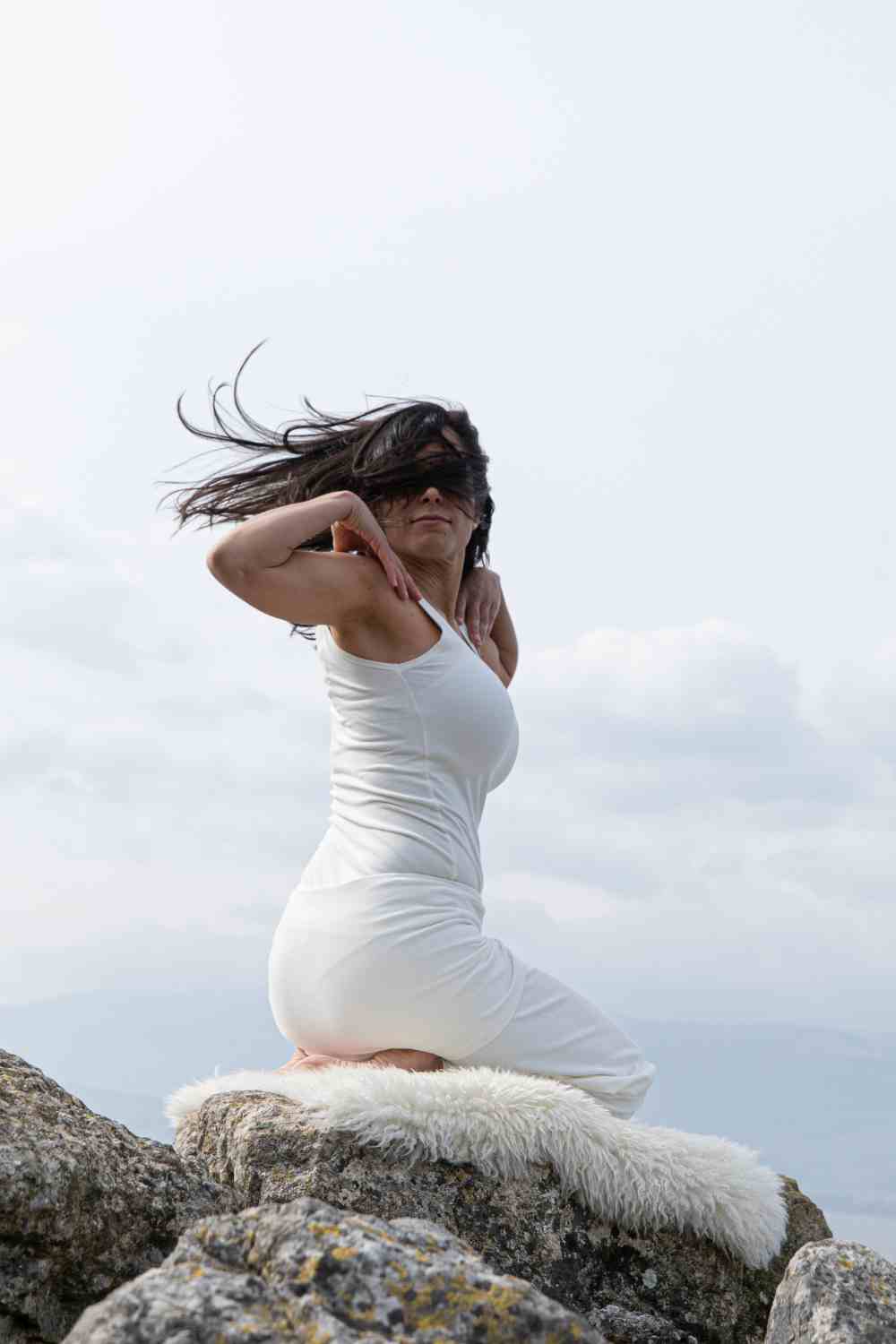
White holds all colours at once. In Kundalini Yoga, it is said to extend the aura and protect it, which is why many practitioners dress fully in white for sadhana, the early morning practice. Wearing white brings a feeling of clarity and neutrality, as if the mind were rinsed with clear water.
White is also a choice of presence. It shows every gesture. It asks you to be attentive.

Ivory and beige: the colour of truth and simplicity
Ivory is the natural colour of cotton, before any dye. It speaks of what is raw and honest. Where white aims for perfection, ivory accepts nuance. It reminds us that nobody is perfect, and that each of us walks at our own pace.
Beige continues this softness. A warm, quiet base that lets the practice take the whole space.

Taupe: the colour of contentment
Taupe sits between grey and light brown, like the coat of the small animal it is named after. It evokes rest and contentment, santosha in the Yoga Sūtra of Patañjali: being at peace with what is. A colour that calms without weighing down, and moves easily from the mat to the street.

Saffron: the colour of strength and courage
Saffron carries the golden light of sunrise. Worn by the swamis of India, it is one of the most sacred colours in the yogic tradition. It is linked to Svadhisthana, the sacral chakra just below the navel, centre of creativity, emotions and vital energy.
Saffron revitalises. On a grey day, it is a small sun you carry on your skin.

Sienna: the colour of warmth and earth
Sienna is the colour of the clay of Tuscany, of terracotta, of autumn leaves. It shares the vitality of the orange family but keeps both feet on the ground. A warm colour for the cold months, for slow practices, for long evenings.

Bordeaux: the colour of confidence and roots
Bordeaux is a deep red with a touch of oak. It is linked to Muladhara, the root chakra at the base of the spine, visualised in meditation as an intense red. Muladhara connects us to the earth, to safety, to the feeling of being in the right place.
Wearing bordeaux brings a quiet confidence. Not the red of fire, the red of embers.

Raspberry: the colour of joy and tenderness
Raspberry sits between red and pink. It keeps the energy of red and adds the gentleness of pink, the colour of love and kindness towards oneself. A joyful colour, for practices that open the heart.

Deep green and khaki: the colour of nature and the heart
Green is the most common colour in nature: leaves, moss, forests. Spiritually it represents the sap of life, renewal and balance. It is the colour of Anahata, the heart chakra, seat of love and harmony.
Khaki brings green closer to the earth. More sober, more urban, but with the same calm.


Atlantic blue, indigo and navy: the colour of wisdom and expression
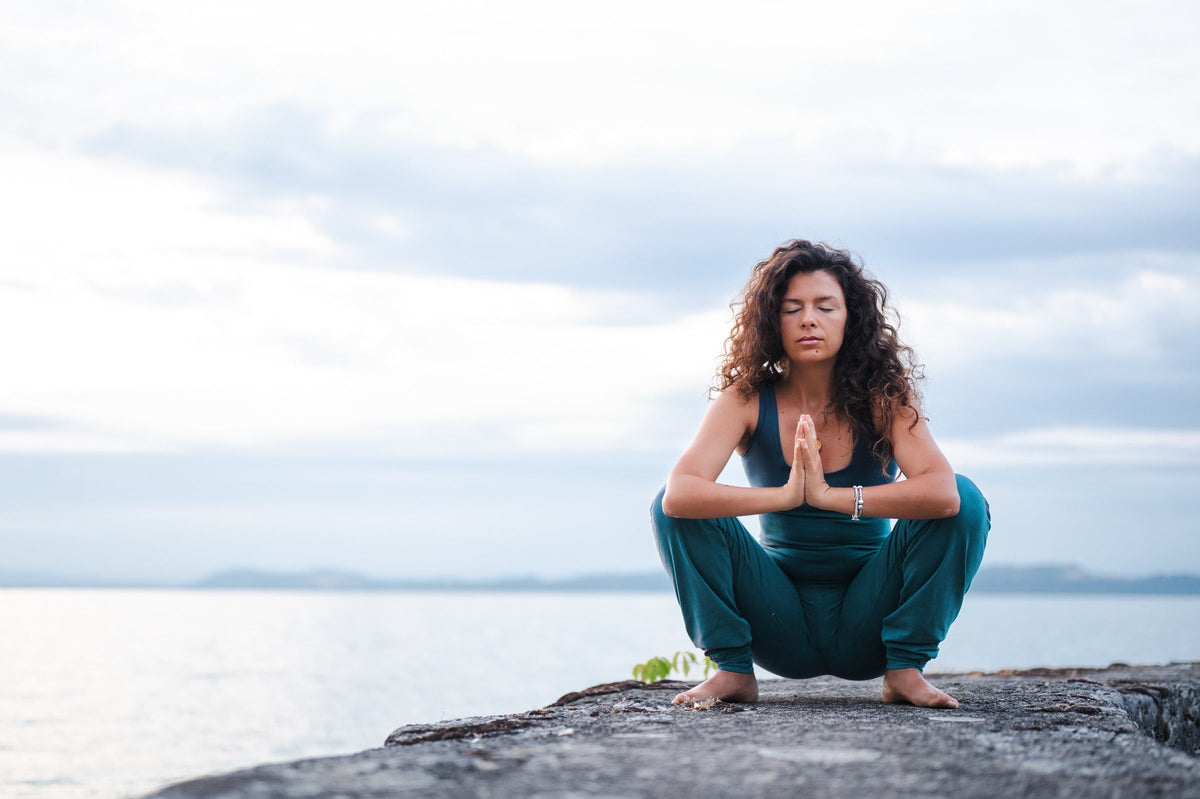
Deep blue is the colour of the ocean and the night sky. It represents wisdom, dream and serenity. In the past, blue pigments were so rare that this colour was reserved for royalty. In yoga, blue is linked to Vishuddha, the throat chakra, which supports the ability to express one's truth. Indigo, a darker shade, is traditionally associated with Ajna, the third eye, seat of intuition.
Our Atlantic blue was inspired by Gatka, the Sikh martial art, and the outfits of its practitioners.

Purple and lilac: the colour of spirituality and dreams
Purple is the colour of Sahasrara, the crown chakra, the doorway beyond the material world. It is a soft, high colour that supports meditation, imagination and the search for meaning. Lilac and mint, its lighter companions in our Evolve collection, bring the same gentleness with more air.

Black: the colour of protection and focus
Black absorbs all colours. It gathers, contains, protects. In many traditions it is linked to the inner journey, to silence, to the night that comes before the dawn. On the mat, black helps you turn inward. In the city, it simply goes with everything.

Colours and chakras: a quick guide
- Muladhara, root chakra: red, bordeaux. Grounding, safety.
- Svadhisthana, sacral chakra: orange, saffron. Creativity, vitality.
- Manipura, solar plexus: yellow. Will, inner fire.
- Anahata, heart chakra: green. Love, balance.
- Vishuddha, throat chakra: blue. Expression, truth.
- Ajna, third eye: indigo. Intuition.
- Sahasrara, crown chakra: violet, white. Connection, spirituality.
To go further, read our article on the 7 chakras explained, with a meditation.
Colours made to last
Our colours are not chosen to follow trends. They are designed to be combined, to grow old gracefully, to match what you already own. Every piece is dyed to OEKO-TEX® Standard 100, Class I. Most of our collection is sewn in a family workshop in Portugal we have worked with since 2009, and the country of origin is always on the label.
Choose the colour that speaks to you today. Then let it accompany you.