You teach yoga to other teachers and have completed over 500 hours of training. How did yoga first come into your life, and what kept you going?
It’s actually quite a funny story how I found yoga.
Before COVID, while studying at university, I was self-employed as a personal trainer, nutrition coach, and group fitness instructor. I taught a wide variety of classes, including barbell training, body workouts, TRX, power circuit, athletic conditioning, aqua fitness, and many other formats. Over time, I became increasingly interested in classes that combined physical training with mindfulness, such as Yoga.
Then COVID hit. During the lockdown, I suddenly couldn't teach any of my classes anymore. One of the studios I worked with offered to pay for a yoga teacher training as a way of supporting and compensating their instructors during that time. At first, I simply thought it would be a great opportunity to expand my qualifications and teach an additional class format once the studios reopened.
What I didn't expect was that yoga would completely change my life.
From the very beginning of my teacher training, I developed a deep passion for the practice. Yoga transformed the way I think, shaped who I am as a person, and taught me to connect body and mind in a way I had never experienced before. It brought me a sense of inner calm, balance, and clarity that I had always been searching for.
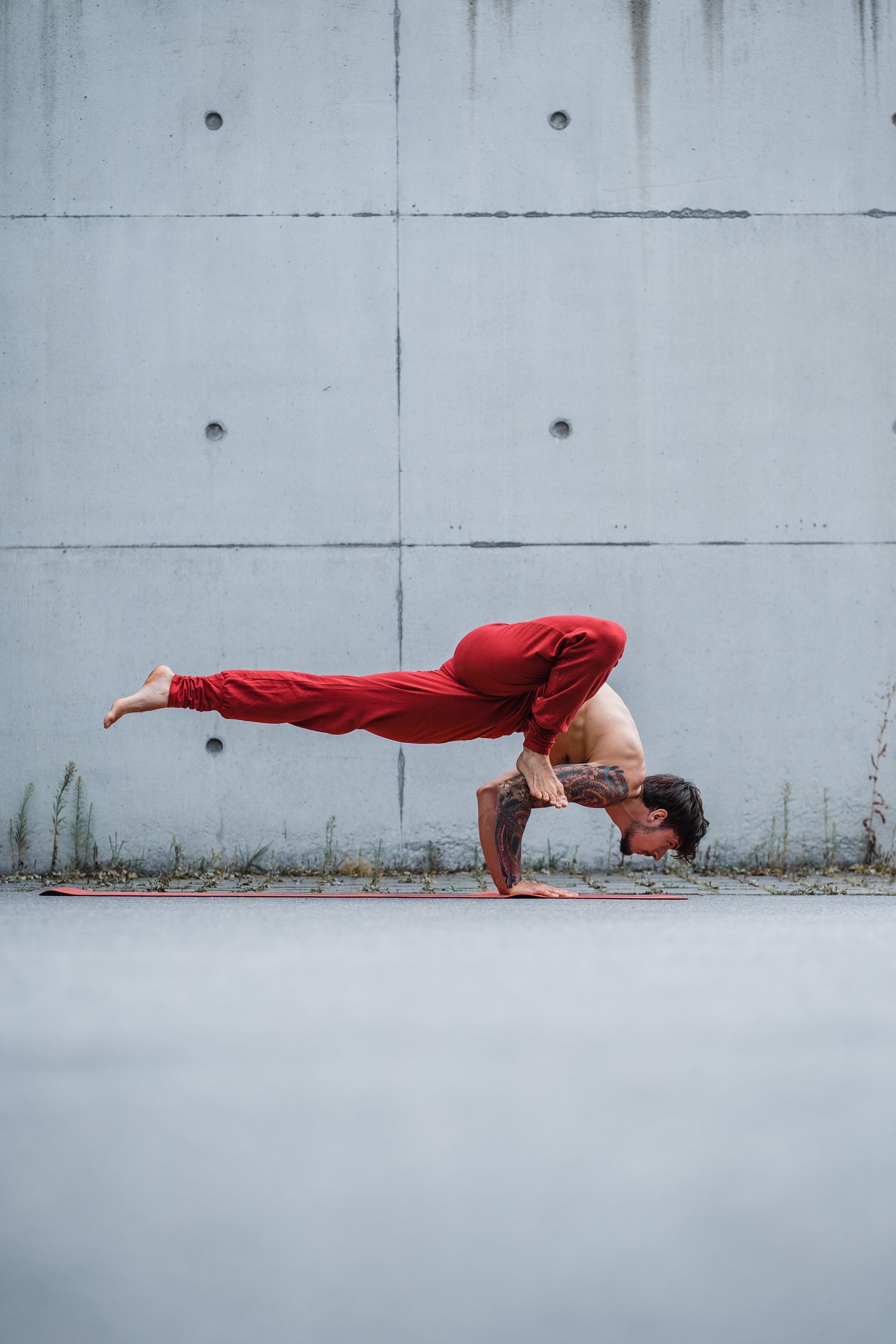
One of the biggest turning points was discovering arm balances. Although I was already very fit and physically strong, I couldn't even hold simple poses like Crow Pose. I initially thought it was a matter of strength, but I eventually realized that the real challenge wasn't physical at all. I wasn't in balance internally. As I cultivated more inner peace, focus, and harmony through my practice, balancing suddenly became much easier. That experience completely changed my perspective and sparked my fascination with arm balances, which remain one of my greatest passions today.
Over the following one to two years, I completed nearly 700 hours of yoga teacher training in different styles, including Vinyasa, Hatha, Yin Yoga, and Yoga Nidra. Since then, yoga has become much more than something I practice on the mat. It has become a way of living that influences not only how I move, but also how I think, make decisions, and approach everyday life.

There is still a widespread idea that yoga is more of a “women’s practice” in the west. What is your experience of yoga as a man, and what do you think men can find in it?
I definitely agree that this perception still exists, especially in Germany and many other European countries. If you walk into an average yoga class here, I would estimate that around 70 to 80% of the participants are women. In other parts of the world, such as Asia or the United States, the ratio seems to be much more balanced, with more men practicing yoga.
Why this is the case is difficult to answer, but I believe it is largely driven by stereotypes. Many men still perceive yoga as something feminine, overly spiritual, or simply not physically challenging enough. As a result, they miss the opportunity to discover a practice that can transform not only their body, but also their mind.
What many people don't realize is that yoga has countless different forms. A Yin Yoga class can be deeply restorative and calming, while a Vinyasa or Ashtanga class with advanced arm balances can be incredibly demanding, both physically and mentally. Hot Yoga or Bikram Yoga, for example, can be one of the toughest workouts I've ever experienced, with challenging postures held in temperatures of around 40°C for up to 90 minutes class. Yoga can be relaxing, powerful, athletic, meditative, and everything in between. Reducing it to a single stereotype simply doesn't reflect what yoga truly is.
For men in particular, yoga offers tremendous benefits. Beyond improving mobility and body awareness, it helps develop inner balance, calmness, focus, and a deeper connection with yourself. In my own experience, arm balances are often the perfect gateway for men. Many are initially fascinated because the poses look strong and athletic. Then they realize that strength alone isn't enough. Even very fit men often struggle with poses like Crow Pose at first. Through practice, they begin to understand that balance doesn't come only from physical power, but from concentration, harmony, breath, and inner stability.
This is exactly the idea behind my book Power Meets Balance: true strength comes from the combination of power and ease. Once men experience this themselves, many begin to understand what yoga is really about. They often continue practicing because they notice benefits that extend far beyond the mat and into their everyday lives.
For me, dynamic styles such as Vinyasa Yoga and especially the practice of arm balances are an excellent way to introduce more men to yoga. They appeal to many men through the physical challenge, but ultimately open the door to something much deeper: greater self-awareness, emotional balance, mindfulness, and a healthier connection between body and mind.
 Your teaching brings together power and stillness, dynamic Vinyasa flows and deep Yin sessions. How do you find balance between those two energies in your own practice?
For me, it's exactly the combination of Yin and Yang that creates balance and harmony. Dynamic and powerful styles like Vinyasa Yoga represent the Yang energy. They build strength, generate heat, and encourage movement and vitality. Yin Yoga, on the other hand, represents the Yin energy. It is slower, calmer, more introspective, and invites you to hold poses for longer, allowing both body and mind to soften and release.
I believe that true balance arises from bringing these two opposites together. They are not competing forces but complementary energies that form a whole. When a yoga practice combines movement with stillness, effort with ease, and strength with softness, it creates space for harmony, inner peace, and a deeper sense of connection.
If we only practice dynamic styles like Vinyasa, we often miss the restorative aspect that allows us to slow down and truly listen to ourselves. On the other hand, if we only focus on meditation or deep relaxation, we may miss the energizing and empowering qualities that movement brings. Both are essential, and together they create a complete practice.
That is why my own teaching is a blend of Vinyasa and Yin Yoga. I often describe my classes as Gentle Flow. They still have the flowing nature of a Vinyasa practice, but with a softer pace and more intention. The focus is not only on moving from pose to pose, but on creating space to become more aware of yourself, to connect body and mind, and to experience the practice more deeply.
Ultimately, yoga is about finding harmony. For me, that harmony is found in the balance between Yin and Yang.
What role does what you wear play in how you move and feel on the mat? Has that ever surprised you?
What I wear plays a huge role in how I feel on the mat. In my opinion, a yoga practice can only feel as comfortable and immersive as the clothing allows it to be. If I'm constantly adjusting my clothes or feeling restricted in my movement, it immediately takes me out of the practice.
For me, the most important qualities are freedom of movement, comfort, and a fit that stays in place without being too loose. Especially during dynamic classes, I also appreciate fabrics that absorb moisture well and remain comfortable throughout the practice.
As someone who practices and teaches a lot of arm balances, grip is another key factor. That's actually something that has surprised many people. I personally am not a big fan of fully synthetic long yoga pants because they often become too slippery during arm balance practice. Having a little more grip between the legs and the arms can make a noticeable difference when practicing challenging poses.
Good yoga clothing shouldn't be something you think about while you're practicing. It should simply support your movement, help you feel comfortable, and allow you to be fully present on the mat. For me, that's exactly what great yoga apparel should do.
It should feel like a second skin, you shouldn’t even notice wearing it.

You have been wearing the Breath of Fire yoga pants for years for your practice. Why did you choose our brand? What did you notice, and what would you say to a man who has never thought about his yoga outfit?
Interestingly, I discovered Breath of Fire right at the beginning of my yoga journey. What first caught my attention was the beautiful design, the natural aesthetic, and the rich, vibrant colors. The Mahan yoga pants looked different from anything else I had seen, and I immediately liked their unique style.
As soon as I tried on my first pair, I noticed that they elevated my practice to another level. They felt like a second skin without ever feeling tight or restrictive. There was no pulling, pinching, or rubbing, and the fit was incredibly comfortable. Even in advanced postures such as the splits or deep hip openers, I never felt limited. The Mahan pants move naturally with the body, staying perfectly in place without being too tight or too loose, even during the most dynamic practices.
Another thing I really appreciate is the fabric. It absorbs moisture very well and still provides enough grip for arm balances, even during intense sessions when I'm sweating. As someone who practices and teaches arm balances regularly, that's a feature I genuinely value. I was also happy that Breath of Fire is a regional brand that focuses on sustainable production. Combined with the timeless colors and thoughtful design, it makes the clothing feel authentic and purposeful.
For men who have never really thought about their yoga outfit, my advice would be simple: don't underestimate how much your clothing influences your practice. I often see men wearing exactly the same outfit they use for the gym. While that might work well for strength training, yoga places very different demands on your clothing. You need unrestricted freedom of movement, breathable fabrics, and a fit that stays comfortable throughout the entire practice.
If your clothes are constantly pulling, feeling too tight, shifting around, or making you think about what you're wearing, your attention is no longer fully on your practice. Your clothing should disappear into the background, allowing you to focus entirely on your breath, your movement, and your experience on the mat.
I truly believe that the more comfortable your outfit is, the deeper and more immersive your yoga practice can become.