
A coiled serpent, asleep at the base of the spine. A breath that wakes it. Kundalini yoga is one of the most intense and mysterious paths of yoga, and the one that gave Breath of Fire its name. Here is what it is, where it comes from, and what a practice looks like.

What is Kundalini yoga, in short?
- Kundalini is the latent energy said to rest like a coiled serpent at the base of the spine, in the first chakra.
- Kundalini yoga uses breathing techniques (pranayama), postures, body locks (bandhas), mantras and meditation to awaken this energy gradually.
- Today, the best-known form is the Kundalini yoga taught in the West by Yogi Bhajan from 1969.
- A class mixes dynamic exercises called kriyas, breathwork such as Breath of Fire, relaxation and meditation, often with mantra.
The awakening of Kundalini
It is difficult to explain the power of Kundalini yoga, because it is an inner experience linked to the body and its energy. Even the testimonies of people who have lived the awakening of Kundalini hardly clarify the phenomenon.
As far as it can be described, Kundalini energy is a state of consciousness that drives the life force. It reveals itself more and more through continuous spiritual practice, while remaining devoted to others.
A few key ideas: Kundalini is a latent energy within us that sleeps like a coiled snake in the first chakra, at the sacrum. It is also called Kundalini Shakti and represents the feminine principle of universal energy.
Yoga exercises and breathing techniques aim to awaken this energy by increasing the level of prana at the navel centre. From there, the energy descends to the first chakra and awakens Kundalini. As it rises, Kundalini passes through the chakras up to the crown of the head, opening the blockages on its way.
The ascent can be experienced as a very intense moment. Traditional texts and many testimonies speak of heat, pressure, sometimes great disturbance. It can also be lived as a moment of clarity and pure joy. That is why every tradition insists on preparation: a strong body, a steady breath, a stable mind, and the guidance of an experienced teacher.
In principle, it is not advisable to try to awaken one's Kundalini at any cost. Its rise is rather the fruit of a healthy, disciplined and shared life. During practice, we sometimes touch moments of deep happiness. It is good to welcome them with grace, without making them the goal.
Kundalini yoga across traditions
There are several forms of Kundalini yoga, linked to different spiritual currents. Techniques that aim directly at awakening Kundalini are found in many schools. They rely mainly on breathing techniques (pranayama), combined with muscular locks (bandhas) and visualisation.

Milarepa, the great saint and poet of Tibet, used such practices during his retreats at high altitude. They can awaken an intense inner heat called tummo, which allowed the hermits to endure freezing temperatures. His biography, Tibet's Great Yogi Milarepa, edited by W. Y. Evans-Wentz, takes us straight into ancient Tibet.
Kundalini also appears in tantric practices. In the West, it is sometimes reduced to sexuality. That view is far too narrow: it ignores both the complexity and the spiritual dimension of the subject.
Kundalini yoga in the West

The idea of Kundalini is first found in the Upanishads, the ancient philosophical texts of India, and later in the tantric and hatha yoga texts.
Today, when we speak of Kundalini yoga, we usually mean the Kundalini yoga of Yogi Bhajan (Harbhajan Singh Khalsa), who began teaching it in the United States in 1969. This form is close to the Sikh tradition and is now practised all over the world.
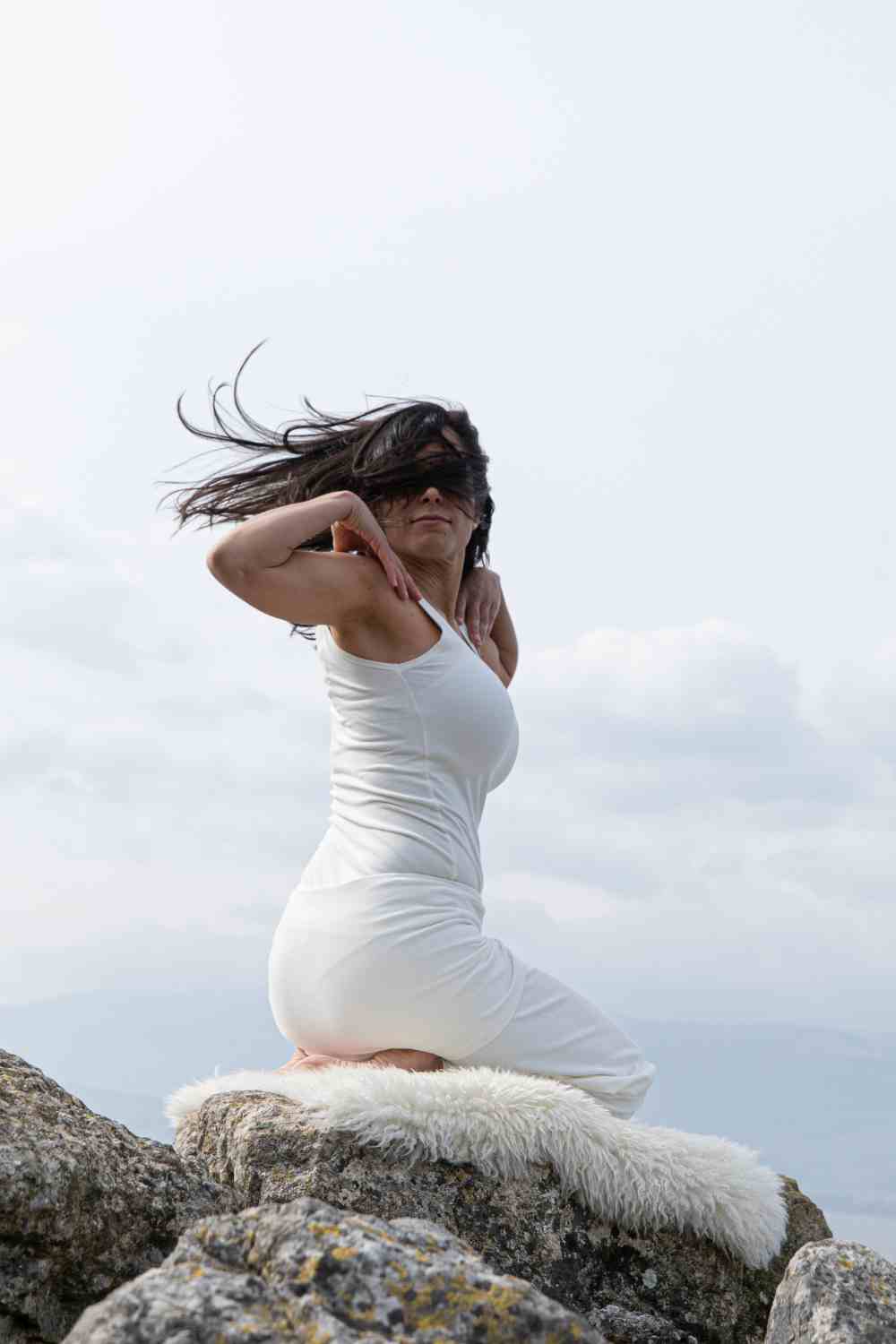
A typical class begins with tuning in with the mantra Ong Namo Guru Dev Namo, continues with a kriya (a sequence of exercises, breath and mantra with a precise purpose), then a deep relaxation and a meditation. Many practitioners wear white, a colour said in this tradition to support the clarity and radiance of the mind.
Breath of Fire: a name born from Kundalini yoga
Our name comes from Breath of Fire, a rapid, rhythmic breath through the nose that is at the heart of Kundalini yoga. Our logo is inspired by the Kundalini serpent uncoiling and rising towards higher consciousness.
That serpent is also embroidered on some of our pieces, a small detail for those who know.


To see how a class unfolds, read Kundalini yoga today: what happens in a class. To begin at home, see Kundalini yoga: benefits and how to start.
Frequently asked questions
Is Kundalini yoga for beginners?
Yes. Most kriyas can be adapted, and a good teacher will guide you to go at your own pace. Start with short practices and listen to your body.
Is Kundalini awakening dangerous?
Practised gradually and with an experienced teacher, Kundalini yoga is a gentle path for most people. Forcing intense practices without preparation is what traditions advise against. If you have a psychiatric condition, epilepsy, heart problems or are pregnant, talk to your doctor and your teacher first.
Why do people wear white in Kundalini yoga?
In the tradition taught by Yogi Bhajan, white is said to expand the aura and support a clear, calm mind. It is also a simple colour that brings the attention back inside.
What should I wear for a Kundalini class?
Loose, comfortable clothes in natural fibres that let you breathe deeply and sit for long periods. Ideally white or light colours. Our Sohang pants were designed for exactly this kind of practice.
The serpent sleeps. The breath knows the way.