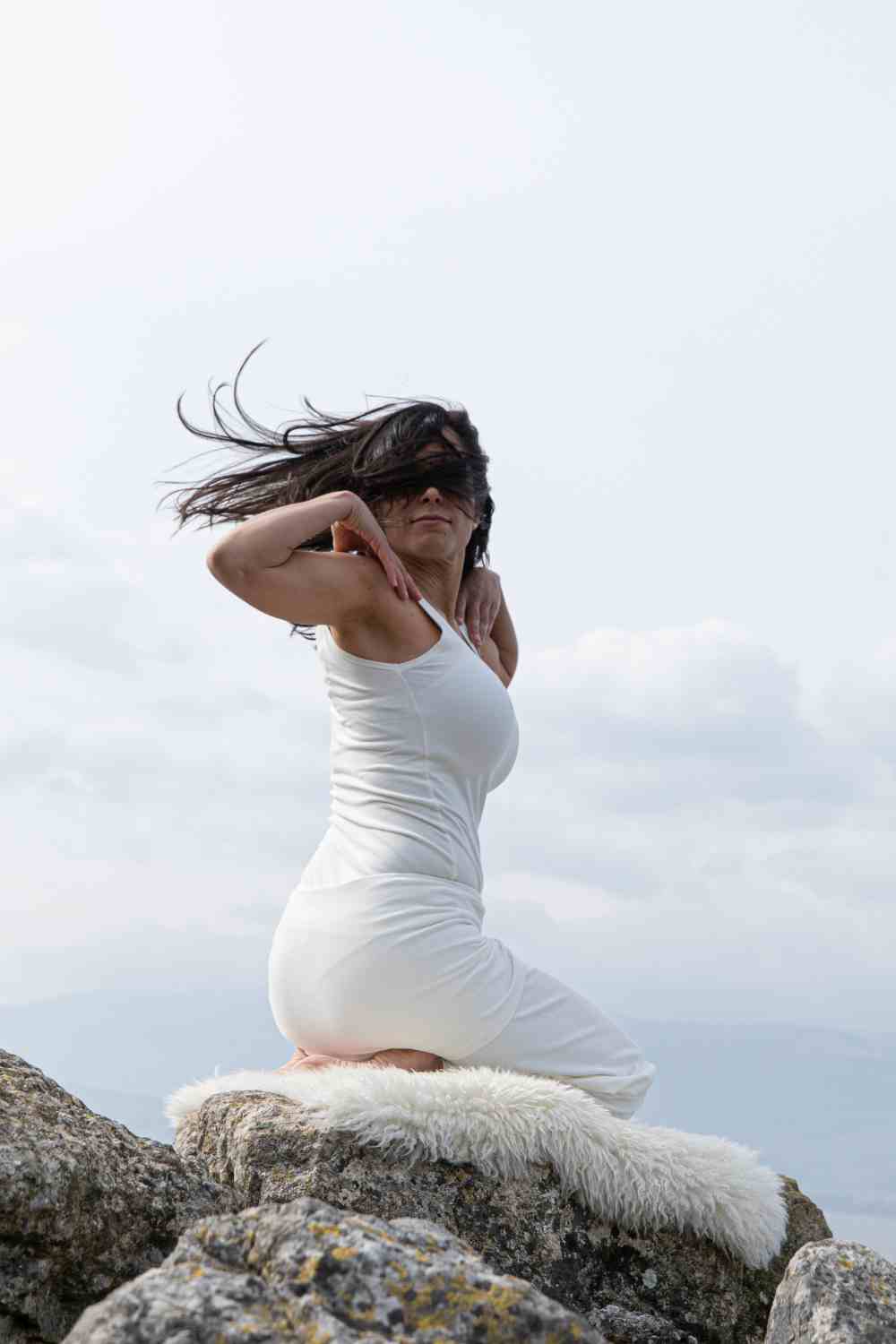

White clothes, a sheepskin or a blanket on the floor, a few words chanted together before anything else. Then the breath speeds up and the room grows warm. Here is what actually happens in a Kundalini yoga class today, step by step.
What is Kundalini yoga, as it is practised today?
Kundalini yoga, often called the yoga of awareness, is a spiritual practice rooted in ancient yogic traditions. The form most people meet in studios today was brought to the West by Yogi Bhajan in the late 1960s and carries strong influences from the Sikh tradition. It combines physical postures, breath control, mantra and meditation to awaken Kundalini, the life force said to lie dormant at the base of the spine.
If you want to explore the meaning of Kundalini energy and its awakening, read our main article on the magical powers of Kundalini yoga. Here, we stay practical: what a class looks like.

How a typical Kundalini yoga class unfolds
- Tuning in. The class opens with a mantra chanted three times, usually Ong Namo Guru Dev Namo (I bow to the creative wisdom, I bow to the teacher within). It marks the passage from daily life to practice.
- Warm-up. Spinal flexes, gentle twists, neck rolls, often with a rhythmic breath. The spine wakes up, the body warms.
- The kriya. The heart of the class: a set sequence of postures, breathing and sometimes mantra, practised for precise durations (one, three, eleven minutes). Movements are often repetitive and dynamic: squats such as Frog pose, lunges, spinal twists, arm exercises held with the eyes closed.
- Breathwork. Kriyas often include pranayama such as alternate nostril breathing or Breath of Fire, the fast, rhythmic breath through the nose that gave our brand its name.
- Deep relaxation. You lie on your back, covered, for several minutes, sometimes with a gong. The body integrates what has been stirred.
- Meditation. Often with a mantra, a mudra (a hand position) or a specific breath. Many meditations last three or eleven minutes.
- Closing. The class often ends with a short blessing song and the words Sat Nam (truth is my identity), repeated together.
Chanting, singing and mantras run through the whole class. They focus the mind and create a sense of inner calm and connection.

The benefits practitioners describe
Kundalini yoga aims to bring the body and mind into balance and to awaken the full potential of each person. Practitioners often describe:
- A stronger, more mobile body: kriyas build strength, flexibility and stamina, and help release tension.
- Mental clarity and focus: the mix of movement, breath and meditation trains concentration.
- Emotional balance: many people feel calmer and more grounded after a class, with a nervous system that settles more easily.
- Spiritual connection: a sense of being connected to something larger, which many describe as the heart of the practice.
For a closer look at these benefits and practical advice to begin at home, read Kundalini yoga: benefits and how to start.
Good to know before your first class
Kundalini yoga can be physically and mentally demanding. It is best practised under the guidance of a trained and experienced teacher, especially at the beginning. Rapid breathing techniques and breath retention are not recommended during pregnancy, or if you have epilepsy, high blood pressure or a heart condition: talk to your doctor and tell your teacher beforehand.

Frequently asked questions
How long is a Kundalini yoga class?
Most classes last 60 to 90 minutes: around 10 minutes of tuning in and warm-up, 30 to 45 minutes of kriya, 10 to 15 minutes of relaxation, then meditation and closing.
Why do people wear white in Kundalini yoga?
In the tradition taught by Yogi Bhajan, white is said to expand the aura and support a clear, calm mind. Many practitioners also simply love its lightness. You can practise in any colour, but natural fibres make a real difference when the body heats up.
Do I have to chant?
No one will force you. You can listen first. Most people find that the vibration of the mantra, even whispered, becomes one of the most grounding parts of the class.
What should I wear?
Loose, breathable clothes in natural fibres that let you squat, twist and sit cross-legged for long minutes. Our Sohang pants were designed for exactly this practice, and the Ankaa pants carry an embroidered Kundalini serpent.
Tune in. Breathe. Sat Nam.