
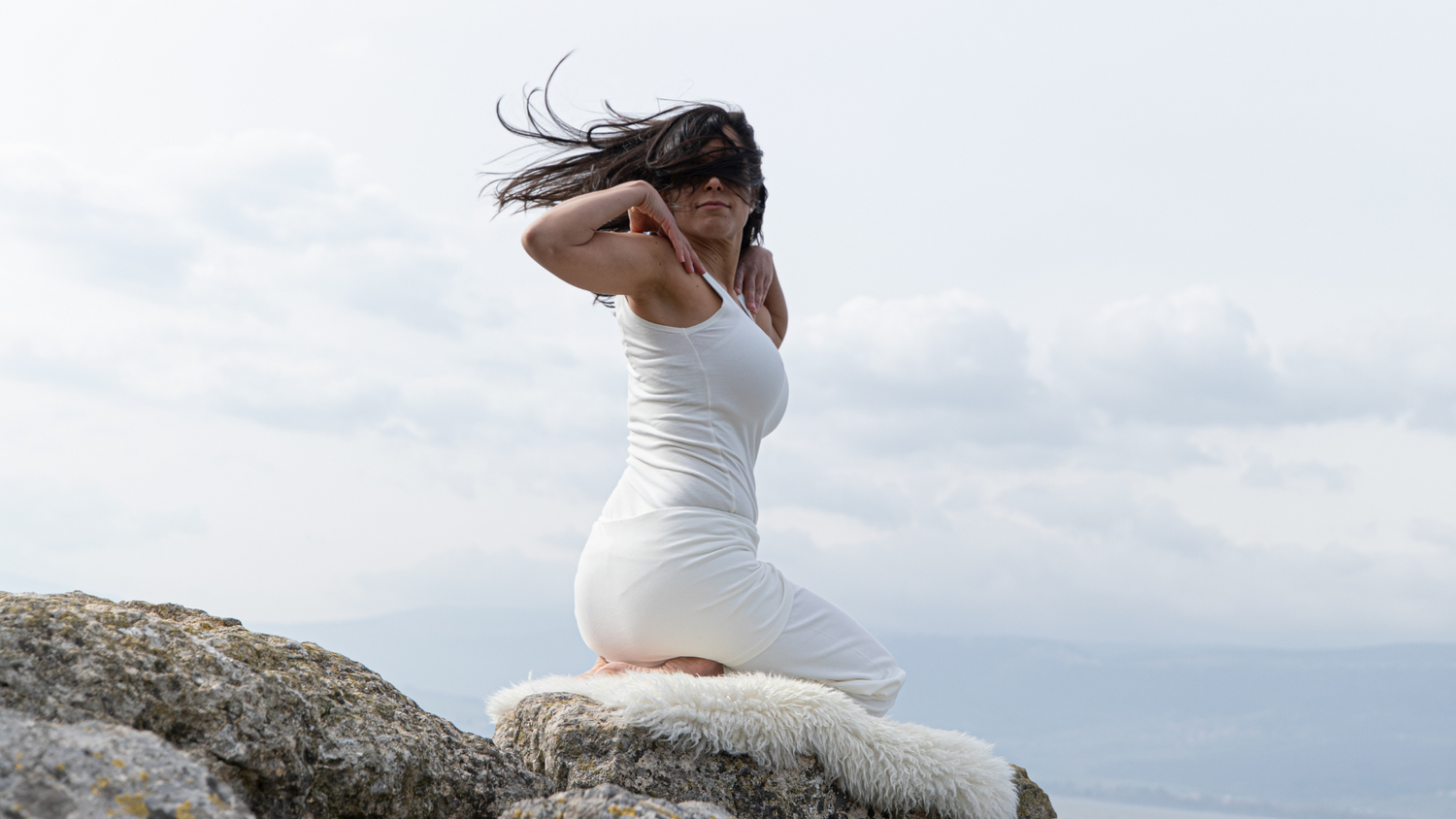
Three minutes. That is all it takes to begin. Sit down, straighten the spine, close the eyes and let the breath find its rhythm. Kundalini yoga does not ask you to be flexible or calm. It asks you to show up, and then it starts working from the inside.
Do you sometimes feel stuck, tired or scattered? Kundalini yoga may be what you are looking for. This form of yoga focuses on awakening the dormant energy within the body, helping you reconnect with your inner resources. In this article, we explore what Kundalini yoga is in a few words, the benefits it is known for, and above all how to start, at home or in a class.
What is Kundalini yoga, in a few words?
Kundalini yoga emphasises the awakening of an energy said to rest at the base of the spine, called Kundalini. The practice combines physical postures, breathing exercises, chanting and meditation. Together, these elements are meant to raise this energy through the body and its energy centres, the chakras, and to release blockages so that you feel more vibrant, alive and connected to yourself.
For the deeper meaning of Kundalini and its awakening, read the magical powers of Kundalini yoga. To know exactly what happens during a session, from the opening mantra to the final relaxation, see Kundalini yoga today: what happens in a class.
The benefits of Kundalini yoga
The benefits people describe go well beyond physical fitness. With regular practice, many report:
- Less stress and a calmer mind. Breathing exercises and meditation help the nervous system settle and make it easier to step back from difficult emotions.
- Better sleep. Many practitioners notice that they fall asleep more easily after an evening practice.
- Strength and flexibility. Dynamic kriyas work the spine, the core and the legs.
- Mental clarity. Focusing on breath and mantra trains concentration.
- Emotional balance and spiritual growth. A sense of inner peace, of intuition, and of connection to something greater than yourself.
These are experiences shared by practitioners, not medical promises. Kundalini yoga does not replace treatment for any health condition.

How to start Kundalini yoga
1. Learn with a qualified teacher
The best way to begin is with a trained teacher who can guide you, correct your posture and adapt the kriyas to your body. Once the basics feel familiar, you can continue at home with books or recorded classes.
2. Practise at the same time every day
Consistency matters more than duration. Even a few minutes, at the same time each day, build a practice that holds. In the Kundalini tradition, people often commit to one meditation for 40 consecutive days: long enough for a new habit to take root.
3. Create a dedicated space
A corner of a room is enough: a mat, a cushion or a sheepskin, a blanket, perhaps a candle. Returning to the same place helps the mind slip into practice and gives it a sense of ritual.
4. Start with the breath
Kundalini yoga uses the breath as its main tool. Begin with long, deep breathing, slow and complete, before trying faster techniques such as Breath of Fire. A mantra or a visualisation can help you stay present with each inhale and exhale.
5. Listen to your body
Kundalini yoga can be intense, but it is not a competition. If a posture or an exercise feels uncomfortable or painful, modify it or rest. Your practice is about kindness towards yourself, not punishment.
6. Stay curious
Approach each practice with an open mind and heart. Some days will feel bright, others heavy. Both are part of the practice.

Precautions
Rapid breathing, breath retention and long kriyas can be demanding. They are not recommended during pregnancy, or if you have epilepsy, high blood pressure, a heart condition or a mental health condition, without first talking to your doctor and your teacher. Never practise intense breathwork while driving or in water.
Frequently asked questions
Can I practise Kundalini yoga at home as a beginner?
Yes, with simple practices: long deep breathing, a short meditation, a few gentle warm-up exercises. Ideally, take a few classes with a teacher first to learn the basics safely.
How long before I feel the effects?
Many people feel calmer right after their first practice. Deeper changes come with regularity: a daily practice of 3 to 11 minutes over several weeks is a good start.
What do I need to begin?
A mat, a cushion, a blanket and comfortable clothes in natural fibres that let you breathe and sit for a long time, such as our Sohang pants. After practice, a cup of golden milk, a drink well known to Kundalini yogis, is a lovely ritual.
As Yogi Bhajan once said: “Happiness is your birthright. Live it!”
Sit down. Breathe. Begin today.