
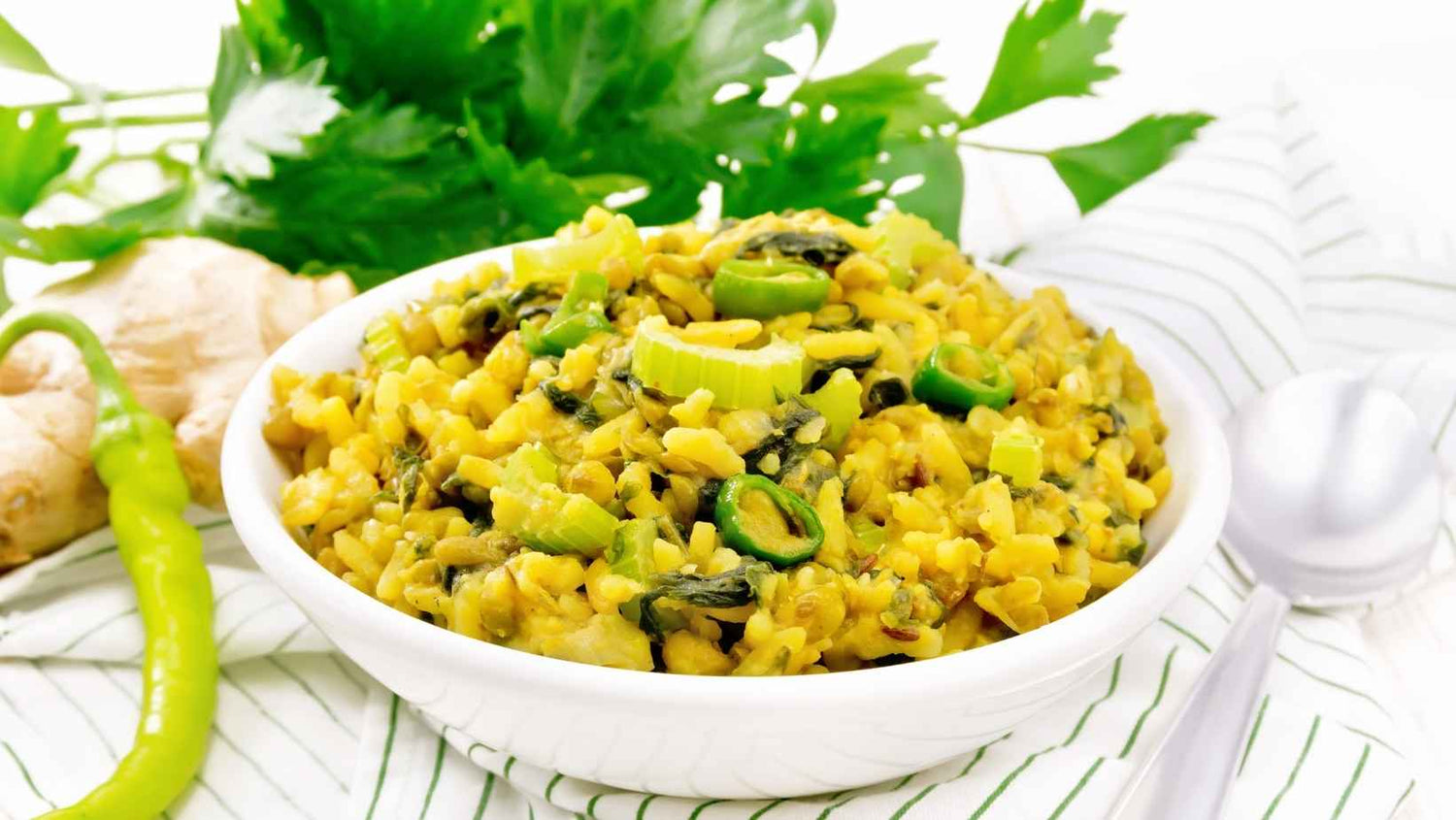
A pot simmering on the stove. Rice, yellow mung dal, a little ghee, turmeric. Kitchari is the simplest dish of the Ayurvedic kitchen, and the one Kundalini yogis come back to when the body asks for rest. Here is the full recipe, and how to follow a gentle kitchari mono diet.

Kitchari, the favourite dish of Kundalini yogis
Kitchari (also written khichdi or kitcheri) is a complete, slow-simmered dish, very popular in India. In Ayurveda, it is a reference dish: nourishing, very easy to digest, and adaptable to every constitution (dosha).
It is the ideal meal for a mono diet: a few days where you eat only kitchari, to give digestion a rest without depriving the body. Many people do it at the turn of the seasons, in autumn, or in January after the end-of-year celebrations. Rice and mung dal together provide a complete protein; vegetables and spices bring the rest.
Kitchari recipe
For 4 servings · Preparation 10 min · Cooking 40 min

Ingredients
- 200 g (1 cup) white basmati rice
- 100 g (½ cup) split yellow mung dal (or whole mung beans, soaked overnight)
- 1 to 2 tablespoons ghee (or coconut oil for a vegan version)
- 1 teaspoon cumin seeds
- 1 teaspoon black mustard seeds
- 1 tablespoon fresh ginger, grated
- 1 teaspoon ground turmeric
- 1 teaspoon ground coriander
- 1 pinch of asafoetida (hing), optional
- 300 g seasonal vegetables: carrot, courgette, squash, sweet potato, spinach
- 1.5 litres water
- Salt, fresh coriander and a squeeze of lemon to serve
Method
- Rinse the rice and the mung dal together, several times, until the water runs clear.
- Toast the spices. Melt the ghee in a large pot. Add the cumin and mustard seeds. When the mustard seeds start to pop, add the ginger, turmeric, coriander and asafoetida. Stir for 30 seconds.
- Add the rice and dal. Stir for one minute so they are coated with the spiced ghee.
- Simmer. Pour in the water, bring to the boil, then cover and simmer gently for 20 minutes.
- Add the vegetables, cut into small pieces. Cook another 15 to 20 minutes, until everything is soft and the texture is close to a thick porridge. Add water if needed.
- Season with salt. Serve warm with fresh coriander and a few drops of lemon.
Kitchari keeps 2 days in the fridge. Add a little water when you reheat it.
Why follow a kitchari mono diet?
Digestion uses a large part of our daily energy. When meals are heavy, rich in sugar, fat, alcohol or coffee, or when we eat between meals all day, the digestive system never rests. We feel it: heaviness, fatigue, a mind less clear.
Unlike a single-food fast, kitchari is a complete meal, eaten two or three times a day. It holds you. You should not feel hungry. A kitchari cleanse is simply a pause: a few days with only a handful of easily digested foods, to reset your eating habits and give your body a break.
How long, and how to do it
Before: the pre-diet
The body does not like sudden change. For about a week before, keep eating normally, but gradually remove alcohol, coffee, tobacco, white sugar, pastries, meat and fried food. You may feel tired or irritable for a few days. It passes. Be gentle with yourself: this is a choice for you, not a punishment.
During: the kitchari days
Decide on a duration before you start. If it is your first time, begin with 3 days: 3 days of pre-diet, 3 days of kitchari, 3 days of transition.
- 3 days: a first rest for digestion, and often for the mind too.
- 11 days: in Kundalini yoga, 11 is a number of mastery over the physical. A good duration to loosen more anchored habits.
- 40 days: in Kundalini yoga, 40 days is the time needed to break a habit and replace it with a new one.
On a 3-day diet, eat only kitchari. Over a longer period, add one or two organic, seasonal fruits a day, and herbal teas. A cup of golden milk in the evening fits well.
After: the transition
Reintroduce foods slowly, over a week to ten days. Porridge in the morning, fruit as a snack, kitchari at one meal, soup and cooked vegetables at the other. Everything gently. This keeps the benefits and avoids going back to old habits too quickly.
Whatever duration you chose, be proud of what you have done. Changing the way we eat is one of the hardest things there is.
To go further: Sat Kriya
To accompany these days, Kundalini yoga as taught by Yogi Bhajan offers Sat Kriya, one of its most practised exercises. It works on the navel point, where, in this tradition, energy and emotions gather.
How to practise it: sit on your heels, spine straight. Stretch your arms above your head, palms together, fingers interlaced, index fingers pointing up. Chant "Sat" while pulling the navel in, and "Naam" while releasing it, at a steady rhythm of about 8 times every 10 seconds. Start with 3 minutes, then lie down and relax for as long as you practised. You can build up gradually to 11 minutes a day.
Practitioners describe it as calming for the nervous system and a source of vitality. In Kundalini yoga, white clothing is traditionally worn for practice, to support the clarity of the mind.

Frequently asked questions
Can I eat kitchari every day?
Yes. In India it is an everyday dish, eaten by children and elders alike. During a mono diet, you eat it at every meal.
Is kitchari vegan?
It is vegan if you replace the ghee with coconut oil or sesame oil.
Which mung beans should I use?
Split yellow mung dal is the easiest to digest and cooks quickly. Whole green mung beans also work: soak them overnight and cook them a little longer.
Is a kitchari diet safe for everyone?
A short kitchari diet is gentle, but it is still a change of diet. If you are pregnant, breastfeeding, diabetic, under treatment or have a health condition, talk to your doctor first.
Receive the printable recipe
Sign up below to receive the printable kitchari recipe and the Sat Kriya practice sheet.
A simple pot. A few quiet days. The body says thank you.