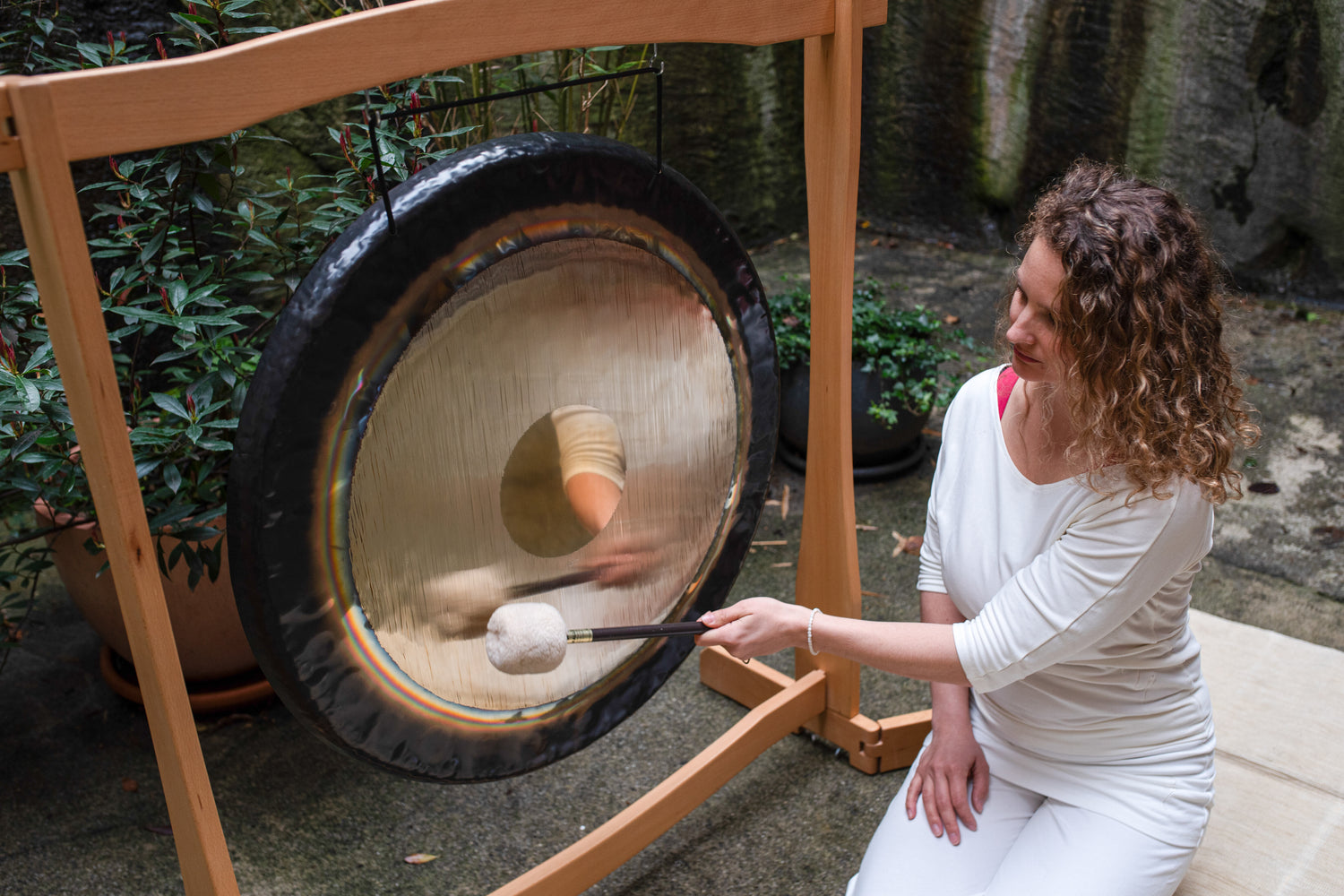
A first stroke, almost silent. Then a wave that rises and fills the room. You lie on the floor, a blanket over your legs, and the sound moves through you before the mind has time to name it. This is a gong bath: no water, only vibration.
What is a gong bath?
In today's world, where stress and constant distractions seem to be part of daily life, many people are looking for simple ways to come back to the body. Gong baths, also called gong meditations, offer exactly that: an immersive experience of sound in which you do nothing but receive.
- You lie down (or sit) in a comfortable position, eyes closed.
- A trained facilitator plays one or several gongs, sometimes with singing bowls, chimes or Tibetan bells.
- The session usually lasts between 30 and 60 minutes and ends with a few minutes of silence.
An ancient instrument for modern lives
The gong has been used for centuries across many cultures, from China to India and Tibet, in ceremonies, temples and meditation. The practice of the gong bath as we know it today is more recent, but it draws on this long history.
The gong produces a very rich sound, full of overtones, that the mind cannot easily follow or predict. That is precisely its gift: unable to hold on to a melody, thoughts tend to loosen. Many people describe slipping into a state between waking and sleep, very close to the deep relaxation of Yoga Nidra. The body rests, the breath slows, and the nervous system can shift towards its calmer, parasympathetic mode.

Two approaches to gong meditation
The gong bath has been explored and refined by several teachers and schools. Two approaches are often mentioned in the world of sound meditation.
Don Conreaux: often called one of the fathers of the modern gong bath, his approach is based on the idea that the sound of the gong can lift consciousness. He uses different types of gongs to create a layered, dynamic sound, a kind of sonic landscape in which participants are immersed and invited to go beyond ordinary thinking. Many people experience his style as a space for emotional release.
The Kundalini yoga tradition: here the gong is used to clear and settle the energy of the body. Precise playing techniques, intentions and mantras guide participants through the sound to bring body, mind and spirit back into balance. This approach often works with the dense, enveloping wash of sound sometimes called the white sound of the gong. To learn more about this tradition, read our article on the magical powers of Kundalini yoga.
The benefits people describe
Gong baths are not a medical treatment. But many participants report effects that make them come back, session after session:
- Deep relaxation: the vibrations invite the body to let go, and many people feel rested as after a long sleep.
- Mental clarity: by encouraging a meditative state, the gong helps clear mental clutter.
- Emotional release: tears, laughter, memories, a sense of lightness. Sound can move what words cannot.
- Renewed energy: people often describe feeling both calm and awake afterwards.
- A spiritual dimension: for some, the gong opens a sense of connection with something larger than themselves.
How to prepare for a gong bath
Come with a light stomach and a little time after the session. Bring a blanket and a cushion, or check that they are provided: the body cools down quickly when it is still. Wear loose clothes in natural fibres, without tight waistbands, so that the breath can drop into the belly. Our women's yoga pants and a warm layer like the Amba wrap shirt are made for exactly these long moments on the floor. A few minutes of conscious breathing before the session also helps you arrive; see our guide to pranayama for daily well-being.

Experience a gong bath in Switzerland
If you would like to attend a gong bath, Pernelle, who runs Breath of Fire, also offers sound baths and workshops through her practice Pure Fréquence. They are an invitation to tune into sound and to the frequencies that support balance, peace and presence. Visit the Pure Fréquence website.
If you have never experienced a gong bath, simply come with an open heart. As Pernelle often says, it is not about escaping reality, but about deepening it: through sound, vibration and presence.
Frequently asked questions
What does a gong bath feel like?
Most people feel waves of sound moving through the body, sometimes as a gentle buzz in the chest or belly. Thoughts slow down, images or memories may appear, and many people drift into a state close to sleep. Every session is different.
Is a gong bath suitable for everyone?
For most people, yes. If you are pregnant, have epilepsy, a pacemaker, tinnitus, sensitivity to loud sounds or a mental health condition, talk to your doctor first and let the facilitator know before the session, so that you can lie further from the gong or leave at any moment.
What should I wear to a gong bath?
Loose, warm and soft clothes in natural fibres, socks and a light extra layer. Nothing that presses on the belly or the neck.
Lie down. Listen. Let the sound do the rest.