
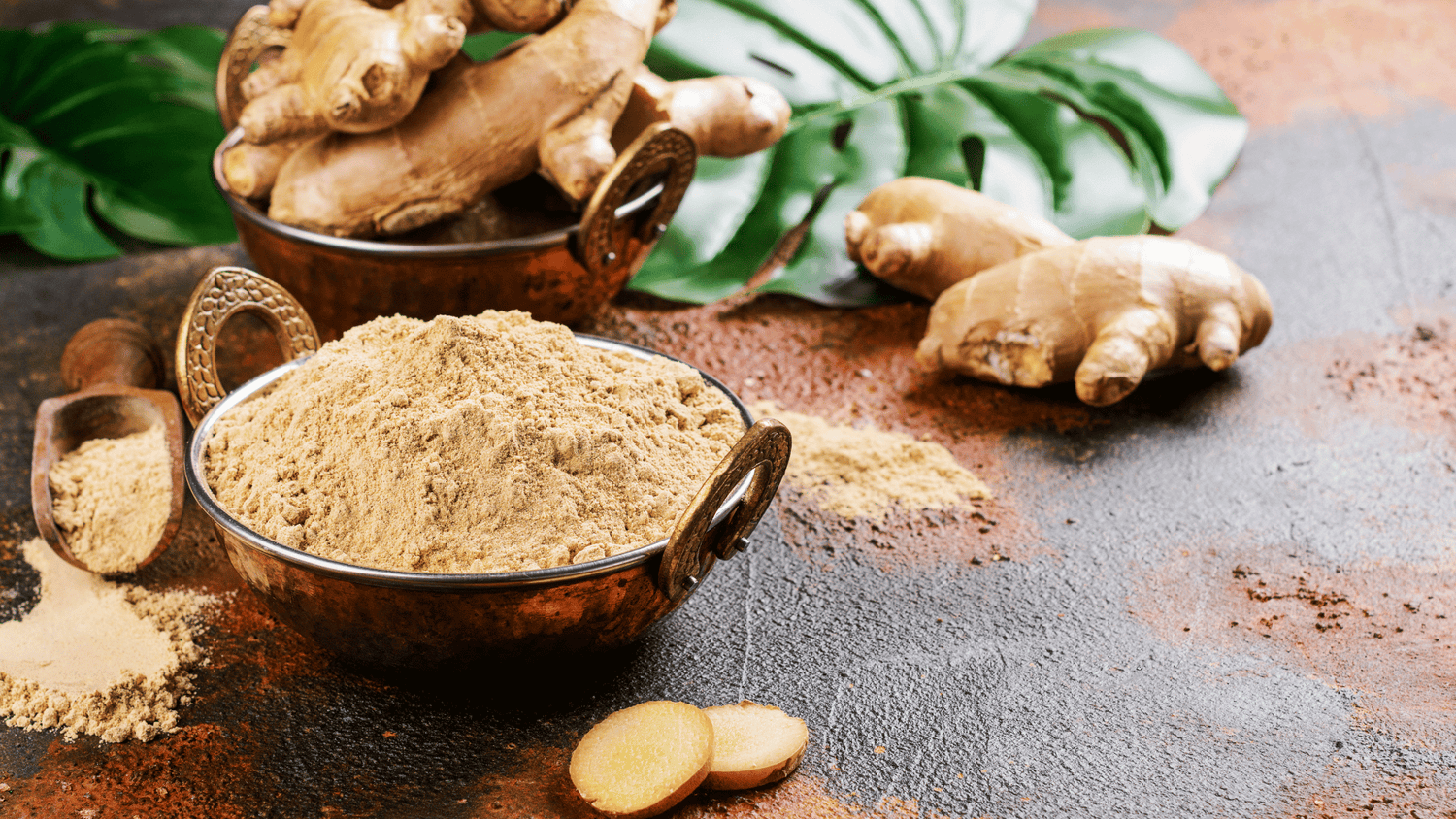
A knobbly root on the chopping board. The knife slides through, and the kitchen fills with a bright, peppery scent. Steam rises from the cup. When autumn arrives, ginger is the first warmth we reach for.
With autumn showing its face, ginger (our dearest and most beloved spice) becomes a precious ally against seasonal fatigue and a lovely companion to the practices that support our natural defences, such as the breathing techniques we describe for the immune system.
Ginger is one of the most treasured spices of Ayurveda, where it is sometimes called vishwabheshaj, the universal remedy. We could almost believe it has magical powers. And yet its qualities can be explained very concretely. Fresh ginger root (the rhizome, the part we eat) is mostly water, with fibre and small amounts of minerals such as magnesium and potassium. Above all, it contains aromatic compounds, the best known being gingerol, which give it its heat and many of its properties.
The traditional properties of ginger
While ginger is best known as a flavouring in Asian cuisines, it has been used for its benefits for thousands of years, in Ayurveda as well as in Chinese medicine. Here are the qualities it is most valued for. They describe a traditional use and the current state of research: ginger is a food, not a treatment, and does not replace medical care.

Anti-inflammatory properties
Ginger contains compounds with anti-inflammatory properties. Traditionally, it is added to food and drinks, or applied as a warm ginger compress, to soothe stiff muscles and joints.
Antioxidant properties
Gingerol has both anti-inflammatory and antioxidant qualities. Like other antioxidants found in plants, it helps the body deal with oxidative stress, which is one reason a varied, plant-rich diet is so widely recommended.
Digestion
This is where ginger shines. In Ayurveda it is said to kindle agni, the digestive fire. It is traditionally used to ease bloating and a heavy stomach, and it is one of the best-studied natural remedies for nausea. A simple Ayurvedic habit: a few thin slices of fresh ginger with a pinch of salt and a squeeze of lime, chewed a little before a meal, to wake up the appetite.
Heart and blood sugar
Researchers are studying the effects of ginger on blood pressure, cholesterol and blood sugar. Some results are encouraging, but they do not make ginger a treatment for heart disease or diabetes. If you live with one of these conditions, keep following your doctor's advice and ask before adding ginger supplements, as ginger can interact with some medications.
What people enjoy ginger for
- Easing occasional nausea, for example when travelling.
- Supporting digestion and soothing a heavy stomach.
- Warming the body on cold days.
- Soothing stiff muscles and joints, as a warm compress or in food.
- Relieving period discomfort, as a warm tea.
- Comforting a sore throat, with honey and lemon.
For another warming evening drink, try our golden milk, a drink well known to Kundalini yogis.

Ginger in everyday life
The easiest way to enjoy ginger is to use it often, in small amounts. Grate it fresh into soups, dals and stir-fries, add it to a pot of kitchari, or slice it into hot water with lemon in the morning. In Ayurveda, fresh ginger is considered milder, dried ginger more heating and drying.
Do not overdo it: too much ginger can cause heartburn, bloating or mouth irritation. It is sometimes not recommended for people with stomach ulcers, gallstones or bowel problems. For more ideas on yogic eating, read how to eat like a yogi.
We hope this article helped you. We would love to hear from you.
Love and light, Alexia
Frequently asked questions
What is the healthiest way to consume ginger?
Ginger can be eaten raw, dried, juiced or cooked in food and drinks such as tea. Fresh ginger, grated into meals or infused in hot water, is the simplest and gentlest way to enjoy it every day.
How do I make ginger tea?
Slice 2 to 3 cm of fresh ginger into a cup of water, simmer for 5 to 10 minutes, then add lemon and a little honey if you like. Drink warm, ideally in the morning or after a meal.
Can too much ginger be harmful?
As a food, ginger is safe for most people. Beyond about 4 to 5 grams a day, it can cause mouth irritation, heartburn or digestive discomfort. Ginger can also increase the effect of blood thinners. If you take medication (especially for blood clotting, blood pressure or diabetes), have a bleeding disorder, gallstones or an ulcer, are pregnant or about to have surgery, ask your doctor before taking ginger regularly or as a supplement.
What are the benefits of ginger tea?
A cup of ginger tea warms the body, supports digestion and comforts a sore throat or a dry cough. Many people also enjoy it as a gentle morning ritual, in place of coffee.
Author: Alexia Sestito
Alexia joined our family team in 2019, endowed with great sensitivity and a pen as delicate as it is deep. Alexia writes many of our newsletters and is inspired to provide you with high-quality content. Passionate about the philosophy of yoga, Alexia takes you along from theme to theme. In addition to her work at Breath of Fire, Alexia is also a writing workshop leader.
Slice. Steep. Let the warmth rise.